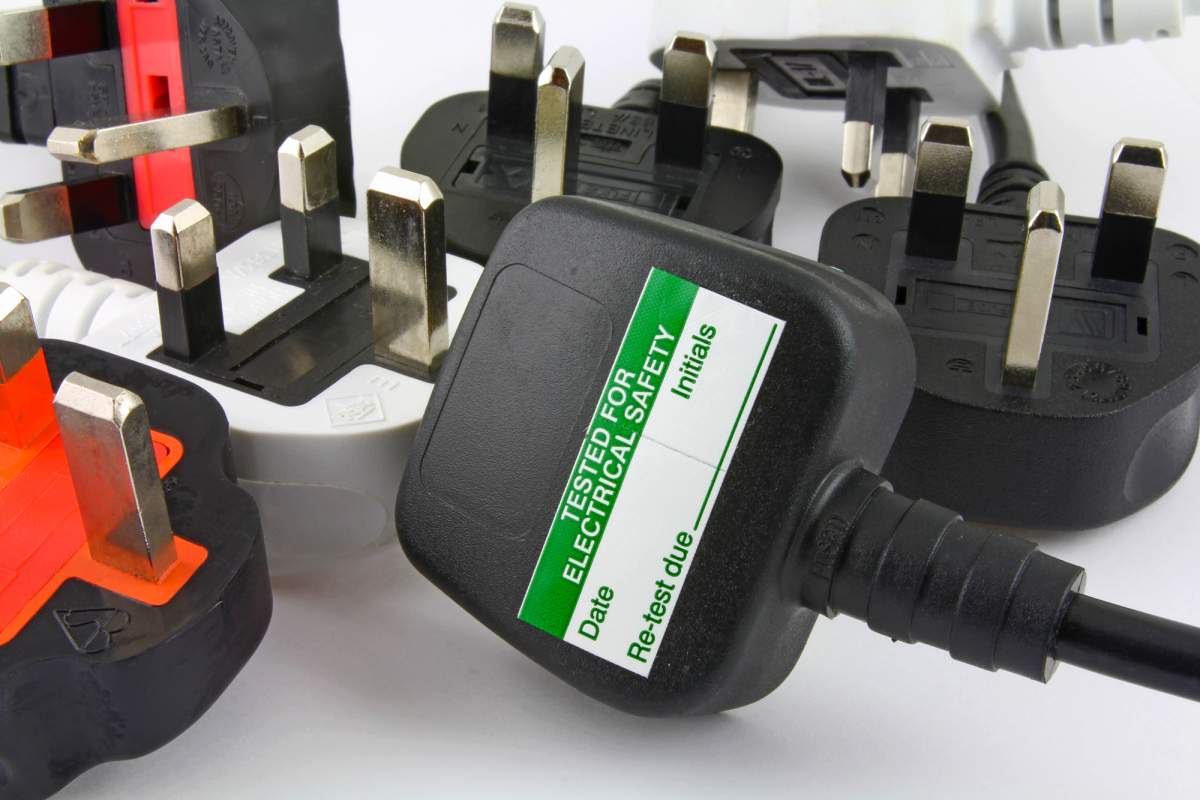
Portable Appliance Testing
Commercial PAT Testing Across South Wales
PreventaShock is the portable appliance testing arm of PreventaPest, looking after PAT testing for businesses, landlords and organisations right across South Wales, from Swansea, Cardiff and Newport to Bridgend, Llanelli, Neath, Port Talbot, Carmarthen and beyond. Whether you've a single shop to sort or hundreds of appliances spread across several sites, we keep your electrical equipment safe and your paperwork in order, with as little disruption to your day as possible.
What PAT testing involves
Portable appliance testing is the routine checking of electrical equipment to make sure it's safe to use. It comes in two parts. The first is a thorough visual inspection of the plug, the lead and the casing, which is where the majority of faults are found. As part of that, we check the fuse rating and, if it's wrong, replace the fuse free of charge; if a plug is found to be unserviceable, we change the whole plug, again at no extra cost.
The second part is the electrical testing itself, carried out where an appliance calls for it:
- Earth continuity (bond) test
- Insulation resistance test
- And, where appropriate, current leakage and load tests
Our testing follows the IET Code of Practice for the In-Service Inspection and Testing of Electrical Equipment, the recognised industry standard. Every item that passes is labelled and logged, so you finish with a clear record of what was tested and when.
Is PAT testing a legal requirement?
It's widely assumed that PAT testing is a legal must, carried out every year. That isn't quite right, and it's worth understanding where you actually stand. No law names PAT testing, and none sets a fixed testing interval. What the law does is place a duty on you to keep electrical equipment safe. The Electricity at Work Regulations 1989 require electrical equipment that could cause injury to be maintained in a safe condition, and related duties sit in the Provision and Use of Work Equipment Regulations 1998 and the Management of Health and Safety at Work Regulations 1999.
PAT testing is simply the most recognised way of showing you're meeting those duties. The Health and Safety Executive backs a sensible, risk-based approach rather than blanket annual testing, and its guidance on maintaining portable electrical equipment sets out how often different equipment should be checked depending on what it is and where it's used. We're glad to help you work out what's right for your premises rather than testing everything to the same calendar for the sake of it.
PAT testing for businesses
Most of our work is commercial, and we cover just about every kind of workplace, offices, shops, pubs, cafés and restaurants, hotels, schools and nurseries, care homes, gyms and leisure sites, warehouses and industrial units. We'll arrange the testing around your opening hours and busy periods, work tidily, and hand you the certificates and records you'll need for insurers, auditors and health-and-safety checks.
PAT testing for landlords and holiday lets
If you let property, you have a duty to make sure the electrical appliances you provide are safe for your tenants. Many landlords arrange a PAT test between tenancies, both for their own peace of mind and to satisfy letting agents. We test the appliances supplied with flats, houses, HMOs and holiday lets across South Wales, and provide a clear certificate for your records.
Contracts and scheduled testing
For businesses that would rather not keep track of it themselves, we set up ongoing testing on a schedule that suits the site, and give you a nudge when the next round is due. It's a tidy way to stay on top of things across one site or many. If you need testing at shorter notice, a looming audit, a new contract, a premises opening up, get in touch and we'll do our best to fit you in quickly.
What does PAT testing cost?
There's no single price, because it depends on how many appliances you have, what kind they are, and where the site is. Rather than guess, we'll give you a straightforward quote for the work in front of us. Get in touch with a rough idea of your premises and the number of items, and we'll come back with a price.
Local PAT testing across South Wales
We've dedicated pages for the towns we cover most, with a bit about each area and the businesses we work with there:
- PAT testing Swansea
- PAT testing Cardiff
- PAT testing Newport
- PAT testing Bridgend
- PAT testing Llanelli
- PAT testing Carmarthen
- PAT testing Neath
- PAT testing Port Talbot
- PAT testing Llandeilo
Frequently Asked Questions
Book your PAT testing
To book, or just to talk through what your premises needs and get a quote, get in touch and we'll sort a time that works for you.