How Long Should a Business Keep Its Records Before Shredding Them?
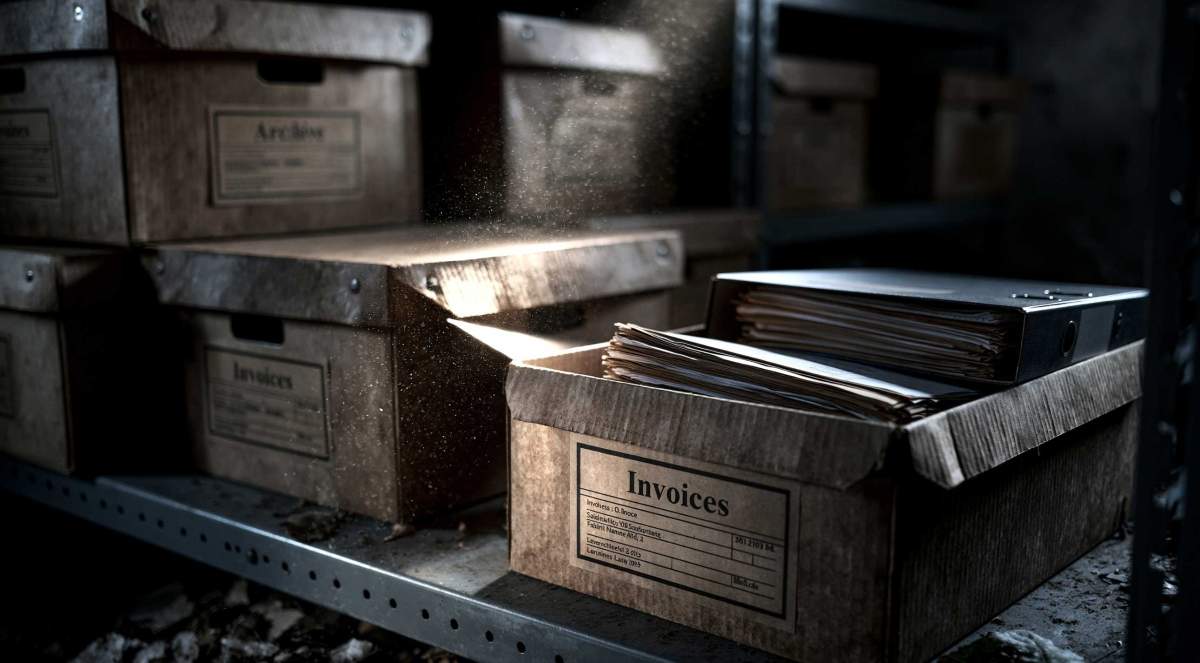
Every business ends up with them: the boxes of old invoices in the storeroom, the filing cabinet nobody's opened since 2019, the archive of paperwork that moves premises with you because nobody's quite sure whether it's safe to get rid of. The question we hear all the time is a simple one, "can I shred this yet?", and the good news is that for most records, the law gives a clear answer. Here's a plain-English rundown of the main retention periods for UK businesses, and what to do with the paperwork once its time is up.
The headline rule for limited companies: six years
If you run a limited company, the core rule is that you must keep records for 6 years from the end of the last company financial year they relate to. That covers your accounting records, invoices, receipts, bank statements, contracts and everything else that sits behind your accounts and tax returns.
Note that it's six years from the end of the financial year, not six years from the date on the document. So if your company's year ends on 31 March, an invoice from April 2019, the start of the 2019/20 year, needs keeping until 31 March 2026, and only then can the whole year's records go. In practice, the tidiest approach is to archive by financial year and release a full year at a time.
There are a few cases where records need keeping longer, for example, where a transaction spans more than one accounting period, or where the company has bought equipment it expects to last more than six years. The gov.uk page linked above covers the exceptions.
Sole traders and partnerships: five years
If you're self-employed, the rule is framed around your Self Assessment return: you must keep your records for at least 5 years after the 31 January submission deadline of the tax year they relate to. So records behind a 2024/25 return, due by 31 January 2026, need keeping until at least the end of January 2031. It works out at a similar horizon to the company rule, roughly six years of paperwork on hand at any time.
VAT and payroll have their own clocks
Two other timers run alongside the main one. If you're VAT registered, you must keep VAT records for at least 6 years. And if you employ anyone, your PAYE records need keeping for 3 years from the end of the tax year they relate to , and it's worth knowing that HMRC can charge a penalty of up to £3,000 if full payroll records aren't kept. Many businesses simply align everything to the six-year rule for simplicity, which is a perfectly sensible policy: nothing stops you keeping records longer than the minimum, with one important exception.
The rule that says you can keep records too long
Here's the part that surprises people. When your records contain personal data, customer details, employee files, patient or client information, data protection law pulls in the opposite direction. Under UK GDPR's storage limitation principle, you must not keep personal data for longer than you need it. There's no fixed period, it's for you to justify, but "we never got round to clearing the archive" isn't a justification the ICO recognises. Old job applications, records of long-departed employees, ancient customer files: once the legal retention requirement and any genuine business need have passed, holding onto them stops being cautious and starts being a compliance problem in its own right.
So the well-run version isn't "keep everything forever", it's a simple retention schedule: keep each category of record for its required period, then destroy it securely and on time.
When the time's up, destroy it properly
And that last word matters. Expired business records don't belong in the recycling bin or a skip, a document you're finished with still carries names, addresses, bank details and account numbers, and it's only genuinely gone when it's been securely destroyed. That's exactly what our confidential waste destruction service is for: we collect your expired paperwork from premises across South Wales and destroy it securely, so a clear-out never turns into a data breach.
One honest caveat to finish: the periods above are the general rules, and some sectors, healthcare, legal, financial services, carry their own longer requirements on top. We're pest controllers and shredders, not accountants, so for anything borderline, a quick word with your accountant before the shredder is always worth it. But for the everyday mountain of expired invoices and old files? Six years, then let it go.
Get in touch
Got an archive that's served its time? Get in touch and we'll arrange secure collection and destruction of your confidential waste.
Related PreventaPest service: Learn about PreventaPest confidential shredding and secure waste destruction.