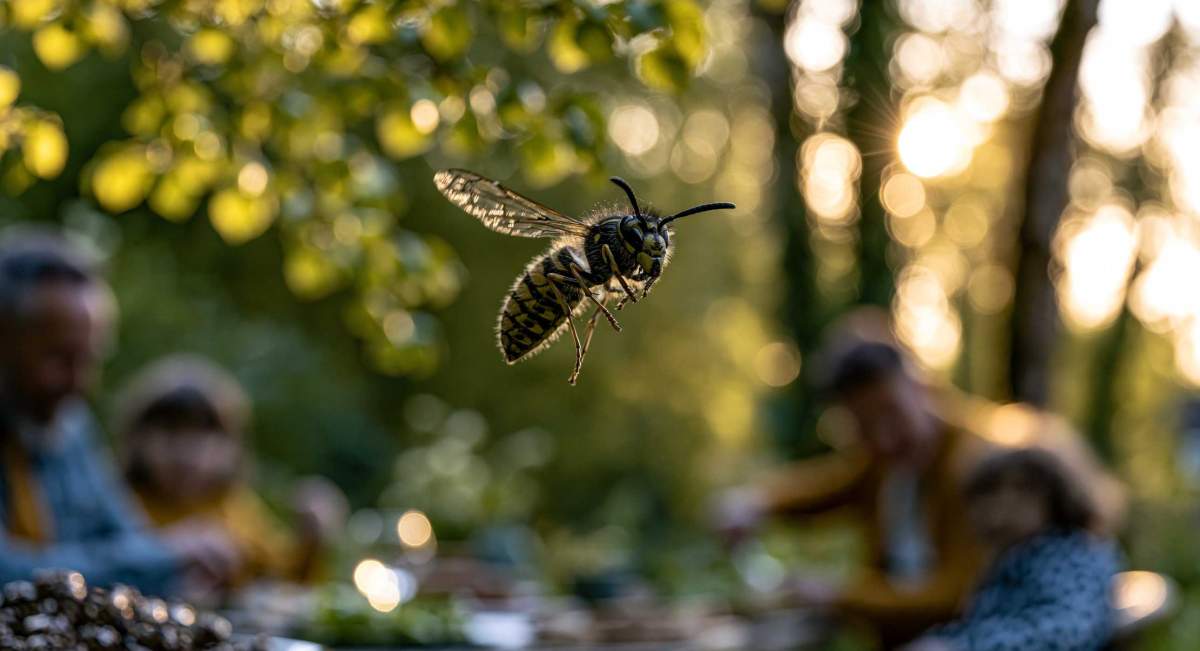
How to Keep Wasps Out of Your Garden (and Why They Turn Up in the First Place)
Few things clear a garden table faster than a wasp taking an interest in your drink. Come the warmer months, and especially from late summer onwards, they seem to appear from nowhere, homing in on food, fruit and anything sweet. If you'd like your garden back, it helps to understand why they turn up when they do, because once you know that, keeping them at bay gets a lot easier.
Why wasps take over the garden in late summer
Wasps aren't actually out to ruin your afternoon, their behaviour changes for a very specific reason. For most of the summer, worker wasps are busy hunting insects to feed the grubs back in the nest, and in return the grubs produce a sugary secretion the adults feed on. It's a tidy arrangement that keeps them occupied and well away from your picnic. But as the British Pest Control Association explains, towards late August the queen stops laying, the grubs disappear, and suddenly the workers have no job and no sugar supply. So they go looking for it elsewhere, in fallen fruit, fizzy drinks, jam and whatever's on your plate, and they get noticeably bolder and more short-tempered about it. That's the wasp that chases you round the garden in September.
How to deter wasps from your garden
Knowing what they're after, sugar and food, most of the ways to keep them away follow naturally:
- Cover food and drinks.
Keep sweet food and drinks covered when you're eating outside, and be especially wary of cans and bottles, a wasp climbing inside for a sip is how a lot of stings happen. Pour drinks into glasses you can see into. - Clear fallen fruit.
If you've apple, pear or plum trees, windfalls left to ferment on the ground are a wasp magnet. Picking them up regularly takes away one of their favourite late-summer food sources. - Keep bins lidded and clean.
Outdoor bins full of food waste and empty drinks cans are exactly what wasps are hunting for. Keep lids on, rinse cans and bottles, and site bins away from where you sit. - Don't swat or flap.
It's the natural reaction, but a squashed or panicked wasp can release a chemical signal that draws others in, and unlike bees, wasps can sting more than once. Staying calm and moving away slowly is genuinely the better bet. - Go easy on strong scents.
Sweet perfumes, scented candles and the like can attract wasps in, so it's worth being sparing with them if you're eating outdoors.
Should you get rid of wasps at all?
It's worth a word in the wasps' defence, because for most of the year they're doing you a favour. Through spring and early summer they hoover up aphids, caterpillars and other garden pests to feed their young, which makes them a genuinely useful bit of natural pest control. So a few wasps passing through the garden aren't a problem worth worrying about, and deterring them is usually a better first move than reaching for a can of spray.
A nest is a different matter, though, particularly if it's near the house, a doorway, or anywhere people pass regularly.
Dealing with a wasp nest
If you find a nest, the firm advice is to leave it well alone rather than tackle it yourself. Disturbing a nest can provoke the whole colony at once, and with wasps able to sting repeatedly that's a nasty situation, more so for anyone with an allergy. A professional treats the nest safely in a single visit, usually without any need for you to be anywhere near it. You can read more about how we handle them on our wasp control page.
If the wasps have taken over your garden this summer, or you've spotted a nest you'd rather not go near, feel free to get in touch , we cover homes and gardens right across South and Mid Wales, and we're always happy to help.
Related PreventaPest service: If you need help with an active problem, see our professional pest control service.