Mice in the Kitchen: Why Cold Weather Sends Them to You
You move the toaster to wipe underneath and there they are. Small, dark, unmistakable. Your first thought is that the kitchen is clean, which it is, and your second is that this must mean something about you, which it doesn't. October is when this happens in Welsh homes, and the reason has nothing to do with your housekeeping.
What changed outside
House mice can live indoors throughout the year, while other mice may spend more time outside. Colder weather and changing food availability can increase movement into buildings, so autumn often brings more sightings. Your kitchen is the target because it offers all three things they need in one room: warmth from appliances, water under the sink, and food.
And they need remarkably little of it. A few crumbs behind the bread bin sustains a mouse. So the frustrating truth is that even a clean kitchen can provide enough food and shelter, but good sanitation, sealed food and prompt removal of spills are still important controls.
How small a gap, exactly
Smaller than you think. A mouse can get through a gap you'd walk past without noticing, and the gaps in most kitchens are numerous: where the waste pipe leaves under the sink, around the gas or water service entry, the gap behind the plinth under your units, an airbrick with a broken vane, the corner of a back door that doesn't quite meet the threshold.
Kitchens are particularly bad for this because they're full of pipework and full of enclosed voids. The space behind and beneath fitted units is effectively a motorway, and once inside it they can move round the room without ever crossing your floor.
The evidence, ranked by usefulness
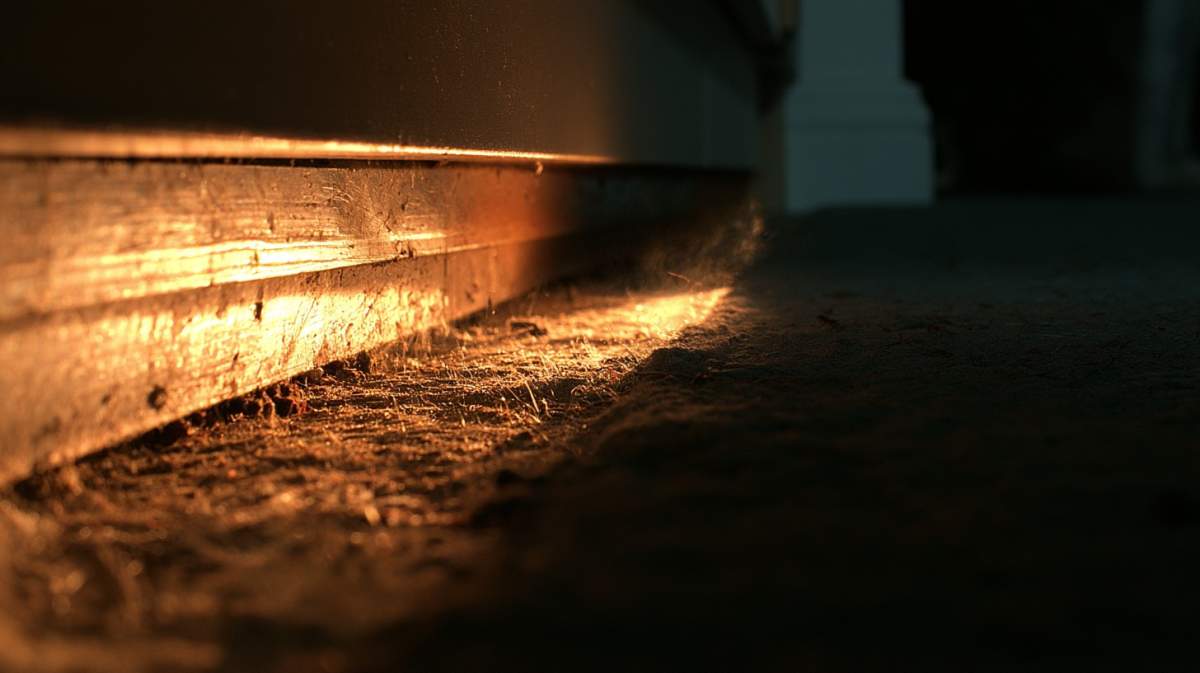
Droppings can help identify travel areas. Colour and texture may offer clues, but they are not a precise or safe way to date activity, so do not handle them directly. Gnawing on packet corners in the cupboard. A faint ammonia smell in an enclosed cupboard. Scratching in the walls at night. And smear marks along skirting where the same route is used repeatedly.
Take a torch and get down at floor level with the plinth off if you can. You'll learn more in ten minutes than from a fortnight of wondering.
The honest first step
If you've seen one mouse, or the evidence is confined to one corner and recent, try the sensible things yourself first. Get all dry food into hard containers rather than packets, because that alone removes most of the reason they'd stay. Clean behind and under appliances safely. Wear gloves, wet droppings or contaminated material with suitable disinfectant and remove it with disposable towels; do not sweep or vacuum dry droppings because that can put contaminated material into the air. Seal the gaps you can find with something they can't chew through, wire wool packed into a gap and sealed over works where filler alone won't. Then watch for a fortnight.
Plenty of people resolve it at that stage, and we'd rather tell you so than take a call-out fee for a problem you'd have fixed on Saturday morning.
Why traps often disappoint
Most people try traps before they ring anyone, which is fair enough. When they don't work, it's usually for one of three reasons rather than because mice are clever.
Placement is the big one. Mice run along edges, not across open floor, so a trap in the middle of the room is in the one place they'll never go. Set them tight against the skirting, at right angles to the wall, where the droppings tell you they're travelling.
Quantity is the second. One trap against an established population is a gesture. Several, set at once along the routes you've identified, is a plan.
And bait is the third. Cheese is a cartoon. Chocolate, peanut butter or something sticky they have to work at holds them on the trap for longer than something they can lift off cleanly.
When to stop doing it yourself
Seek professional help if activity continues despite appropriate cleaning, trapping and proofing, if you're finding droppings in more than one room, or if you're in a flat or terrace where the neighbours are part of the picture, it's time. Established mice breed quickly, and a shared building means proofing your kitchen alone won't finish it.
Commercial kitchens are a different conversation entirely, because evidence of mice hits your food hygiene rating as well as your nerves. Our mouse control page has more detail, and our pest control page covers how we work.
Get in touch
Tried the sensible things and still finding evidence? Get in touch and we'll deal with it properly before winter sets in.