Molehills Everywhere? What Actually Works in Carmarthenshire
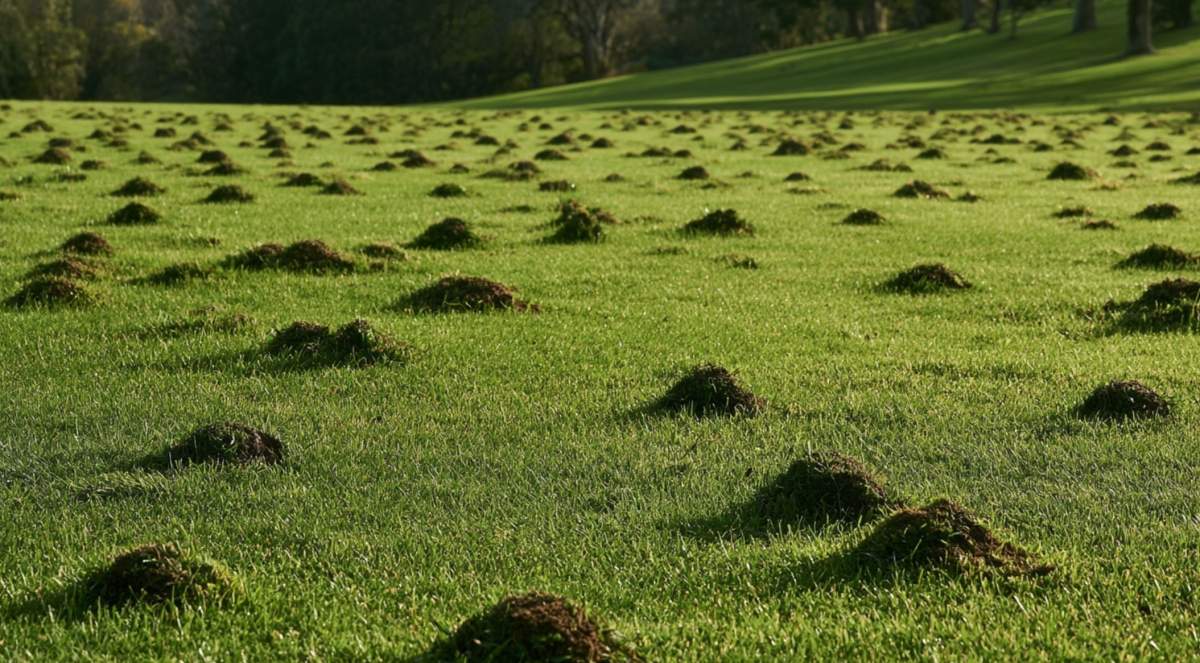
You mowed on Sunday. By Wednesday there are six fresh heaps of soil across the lawn, and by the weekend the paddock looks like it's been shelled. Nowhere in Wales keeps us busier with moles than Carmarthenshire, all that soft, worm-rich pasture is exactly what they want, and nowhere produces more phone calls that start with "I've tried everything".
First, the fact that changes how you see the problem
Moles are fiercely territorial and live alone. That lawn of yours, covered in molehills? It's very rarely a family of moles. You're usually looking at one animal, working one network of tunnels, throwing up spoil as it extends and repairs them. That's actually good news. Deal with your one mole properly and the digging stops. It's also why your problem can seem to vanish for a fortnight and then return: the resident was quiet, or a neighbouring mole has moved into the empty tunnels you thought you'd seen the back of, which sit there like a ready-made house waiting for a tenant.
The things you've tried, and why they disappointed you
We'll say this plainly, because you've probably already spent money on it: the sonic spikes, the milk bottles in the tunnel, the castor oil granules, the petrol-soaked rags. In our experience across hundreds of Carmarthenshire gardens and smallholdings, none of them reliably moves a mole on. A mole's tunnel system is its larder, its home and its life's work. A buzzing noise nearby is an irritation; it is not a reason to abandon the estate. You wouldn't sell your house because next door bought wind chimes. At best you push the digging to a different corner of the same lawn for a while, and the spoil heaps come back.
What actually works
Traditional trapping, done by someone who reads tunnels well. The skill isn't the trap, it's the placement: finding the main runs your mole uses daily rather than the shallow feeding tunnels it may never revisit, setting into them without leaving scent or daylight, and checking on the right rhythm. It's fiddly, unglamorous work, and it's still the method that clears lawns, paddocks and grazing reliably. It's how we handle mole control for everyone from a terraced garden in town to working farms out along the Tywi.
An honest word before you call anyone
If you've got a single, elderly molehill in the corner and nothing new in a fortnight, you may not need anyone. Moles pass through, young ones especially, dispersing in early summer to find territory. It's the pattern that tells you: fresh, dark, crumbly soil appearing every few days means an active resident; grassed-over heaps mean history. And if you're farming, it's worth taking seriously rather than living with, because soil from molehills gets into your cut silage, and the stones a mole brings up through pasture are no friend to your mower blades or your livestock's feed.
Why local knowledge matters with moles
Mole activity in this county follows the ground and the weather: heavy digging as the soil softens in autumn, another burst in late winter as males tunnel widely looking for mates, quieter spells in dry summers when the worms go deep and the moles follow them. We cover the whole area, from Carmarthen and Llandeilo out across the farms and villages between, and there's more on how we work on our main pest control page.
Get in touch
Fresh molehills appearing faster than you can rake them? Get in touch and we'll get the resident dealt with properly.