Rats in the Garden: Feeders, Compost and What Attracts Them
You're washing up, looking out at the garden, and something moves under the bird table. Not a bird. It's unhurried, it's in daylight, and it's clearly been doing this a while. The instinct is to feel that your garden has been invaded. The more useful thought is that something out there has been feeding it, and you can probably work out what.
The bird feeder conversation
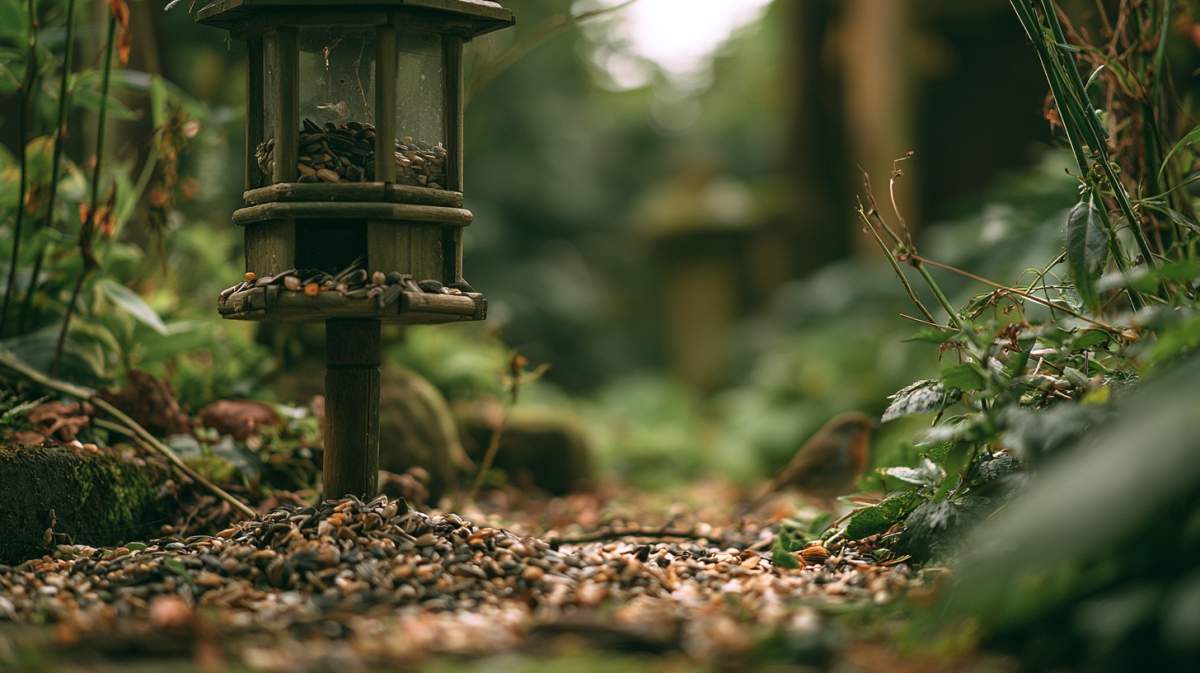
Let's do this one first, because it's the most common cause and the least popular thing to hear. Feeding birds feeds rats. Not directly, but the spillage does, and a feeder that scatters seed onto the ground provides a reliable, replenished food source in exactly the sheltered spot a rat wants.
We're not going to tell you to stop feeding the birds. Plenty of people would rather have the birds and manage the rats, and that's a perfectly reasonable choice to make in your own garden. But if you want fewer rats, the feeder is where to start: use feeders with trays that catch spillage, put out smaller amounts more often, sweep underneath regularly, and stop ground-feeding entirely while you've got a problem.
The other three sources
Compost. Open compost heaps are warm, sheltered and full of food. If yours takes cooked food or meat scraps, it's a rat feeder with a lid off. A sealed plastic bin sitting on a hard base, taking garden and raw vegetable waste only, is far less attractive.
Chickens. If you keep hens, you already know. Spilled feed and open feeders will draw rats within weeks. Feed in the morning, remove what's uneaten, and store the sack in a metal bin rather than the bag it came in.
Cover. Food brings them, but cover keeps them. Decking with a gap underneath, log piles, dense ivy against a wall, an old shed on bearers, overgrown edges. Rats hate crossing open ground, so a garden that offers continuous covered routes is one they'll settle in.
When it stops being a garden problem
Here's the bit worth acting on. Rats in the garden are unpleasant. Rats moving from the garden into the building are a different matter entirely, and autumn is when that transition happens. If you're seeing burrows near the house, activity under decking against the wall, or any sign along the foundations, treat that as the point to get help rather than the point to try one more thing.
Rats gnaw persistently, they'll exploit the gaps around your service pipes, and once they're into a cavity or a loft you have a considerably bigger job. Our article on why rodents move indoors after the harvest covers that seasonal shift.
Your neighbours are part of this
Something we'd gently raise, because it decides whether the problem stays solved. Rats don't respect fences. If the garden two doors down has an open compost heap, a well-stocked chicken run and a decade of accumulated cover, your careful proofing changes very little about the local population.
It's an awkward conversation and most people avoid it. The version that tends to work is practical rather than accusatory: you've seen rats, you're dealing with your side, and you thought they'd want to know. Most people do. Where a whole terrace or a row of gardens is affected, treating several properties together is far more effective than one owner fighting it alone, and it usually costs each household less.
On DIY poison
We'd advise against shop-bought bait in a garden, and not for commercial reasons. Amateur baiting in open gardens risks pets, risks children, and risks the birds and wildlife you're presumably trying to encourage. It also tends to knock numbers back briefly without addressing what drew them in. Removing food and harbourage is essential and avoids unnecessary wildlife exposure, although an established population may still require a properly planned control programme.
Our rat control page has more on the signs, and our pest control page covers how we handle domestic gardens across South and Mid Wales.
Get in touch
Seeing them in daylight, or seeing burrows near the house? Get in touch and we'll deal with it before they move indoors.