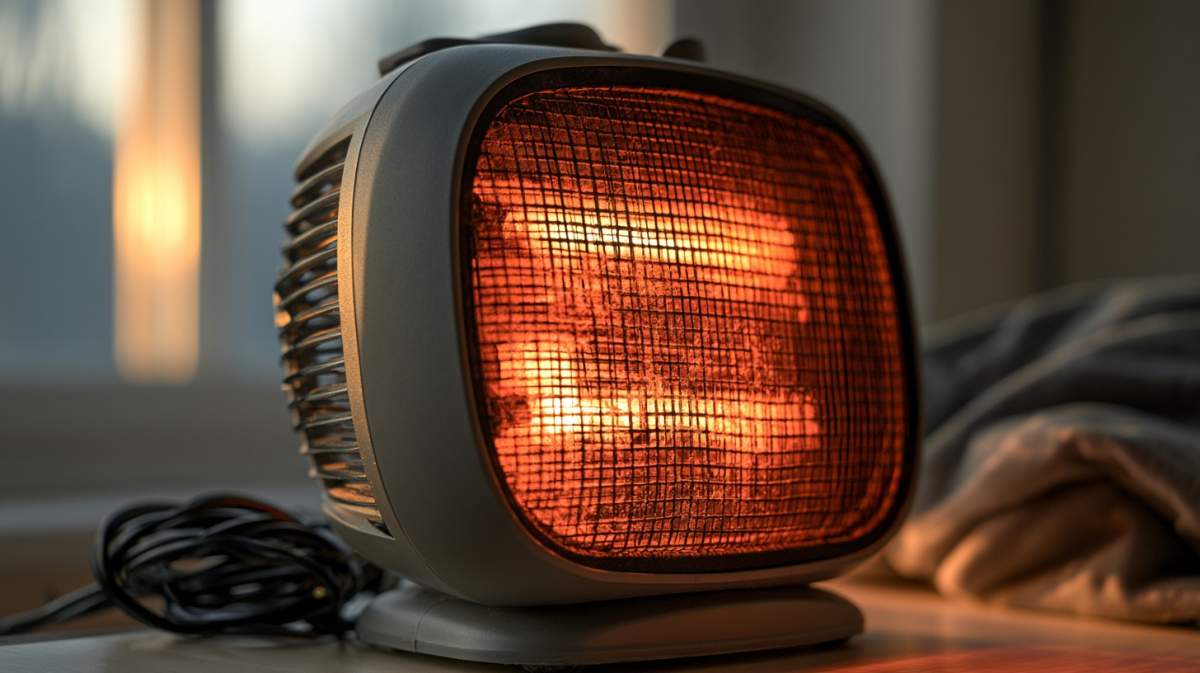
Space Heaters Are Coming Out: The October Electrical Check
The first genuinely cold morning arrives, somebody complains, and within an hour three fan heaters have appeared from cupboards, storerooms and the boot of someone's car. Nobody logged them. Nobody looked at them. They'll now run eight hours a day in your building for the next four months. If there's one seasonal electrical job worth doing in a Welsh workplace, it's this one, and October is when to do it.
Why heaters are a category of their own
Most workplace equipment is used steadily all year, so it wears predictably. Portable heaters do the opposite: eleven months of storage, then sustained high-load use. That pattern is unkind to equipment. Cables get coiled tightly and stored under other things, plugs get knocked about in a cupboard, dust and debris settle inside the element housing over summer and then get heated hard on the first day back.
They also draw serious current. A fan heater is one of the highest-load items in your building, which is exactly why plugging one into a daisy-chained extension lead is the arrangement we most dislike finding on your premises.
The seasonal blind spot on your register
Here's the practical problem. Your testing visit probably happened in spring or summer, when every heater you own was in a cupboard. If they were stored in an inaccessible cupboard and not included in the inventory, they may not have been inspected or tested, and they'll be back in service before anyone on your team thinks about them again. Check your last report: if there isn't a heater on it, you have a gap and you have it right now.
Add the ones that arrive privately. Staff bring heaters from home in cold weather, and the moment one is plugged into your socket it's within your duty to maintain equipment so as to prevent danger, whoever owns it.
Your ten-minute check, today
Before any heater goes back into service on your premises, look at four things. The lead, along its whole length, for flattening, nicks or splits, especially where it's been coiled. The plug, for cracks, heat discolouration or a loose cord grip. The guard and grille, for damage and for the summer's dust, which should be cleared before it's switched on. And the socket it'll live in, for scorching or looseness.
Then think about where you put them, because placement causes more incidents than faults do. Not against curtains, boxes or furniture. Not in a walkway where the lead becomes a trip hazard. Not plugged into an extension lead if you can possibly reach a wall socket. And switched off at the wall at the end of the day, not left on a thermostat overnight in an empty building.
Worth saying plainly
If a heater is damaged or of unknown condition, keep it out of use until it has been assessed. If it has tripped a breaker, stop using it and have the appliance and circuit investigated by a competent person; an overloaded circuit or another fault may be responsible. A new fan heater costs you less than an hour of most tradespeople's time, and the cheap old one in your storeroom is not worth the risk you're carrying for it.
And if heaters appear in your building every winter because it's cold, that's a facilities conversation rather than an electrical one. Portable heating as a permanent solution is expensive to run and adds risk you'd otherwise not have.
An October visit that catches the heaters, the seasonal kit and anything new since spring is a small job. Our PAT testing page explains how we handle it, and our offices page covers working around a normal week.
Get in touch
Want the heaters checked before they run all winter? Get in touch and we'll fit a short visit in this month.