Squirrels in the Loft: That Scratching Is on a Deadline
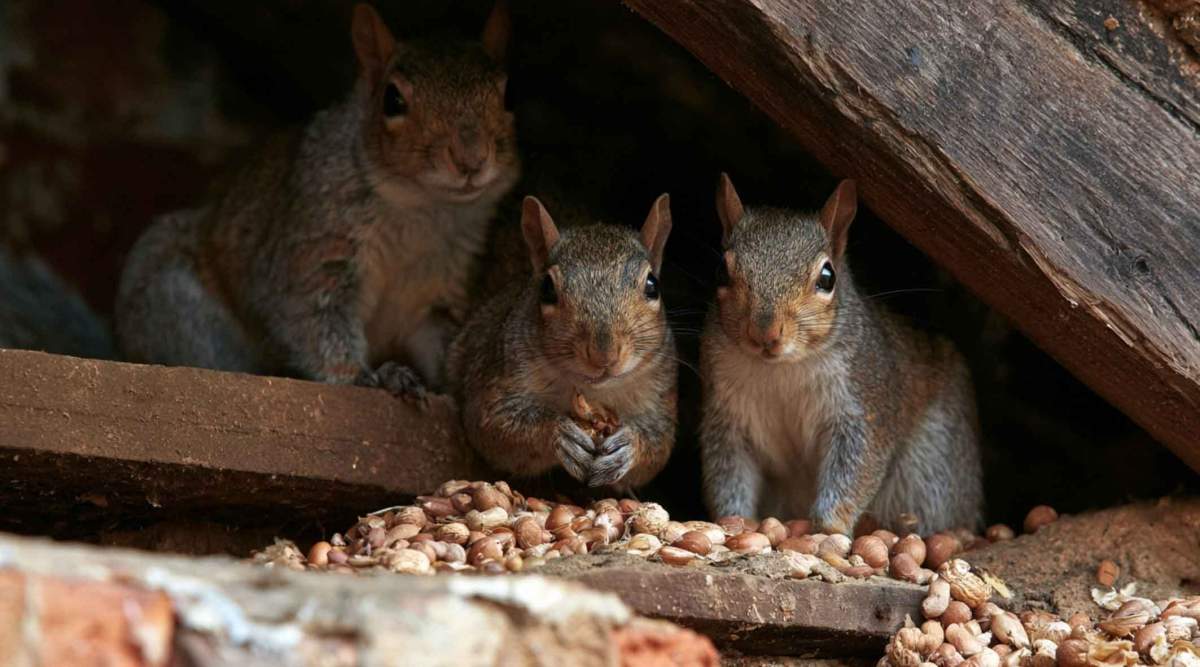
It starts as a scrabble over your head around first light, quick, heavy footsteps that are far too loud for a mouse. By the second week there's a thud or two, something being rolled, and the unmistakable sound of gnawing. If the noise comes at dawn and dusk rather than the dead of night, the smart money is on grey squirrels, and this is one loft guest you shouldn't wait out.
Why the deadline is real
Squirrels don't just shelter in your loft, they renovate it. They shred insulation for bedding, and, far more seriously, they gnaw. Constantly, because their teeth never stop growing and stripping the coating off things is what keeps them in trim. In your loft, "things" means your roof timbers, your stored belongings, your plastic pipework, and your electrical cables. Chewed wiring is the reason a squirrel problem belongs in a different category from most pest calls: it's a fire risk sitting above your bedroom, getting worse at whatever pace the animal fancies, and you've no way of watching it happen. Autumn is when the calls surge, as this year's young look for winter quarters and a warm roof space beats a cold drey every time.
Squirrel, rat or bird? A one-minute diagnosis
Since the treatment differs, it's worth you being sure before anyone quotes you for anything. Timing is your best clue: squirrels are daytime animals, busiest early morning and late afternoon; rats and mice work the night shift. Squirrels sound heavy, with running, rolling and thumping; rodents scratch and skitter. Birds add flapping and cooing and go quiet after dark. Then look outside your house: squirrels usually get in high, along overhanging branches onto your roof, through gaps at the fascia, under lifted tiles or into the soffit, and you'll sometimes see the entry hole's edges freshly gnawed clean.
The legal bit that surprises everyone
Here's where good intentions meet the law. The friendly-sounding option, trap it and drive it to the woods, is illegal. Grey squirrels are an invasive non-native species, and Natural Resources Wales is explicit that it is illegal to release a grey squirrel into the wild or allow one to escape; a live-trapped grey must be humanely dispatched by someone competent to do it, and causing unnecessary suffering is itself an offence. It's an uncomfortable rule, and we understand why people don't like it, but it exists to protect what's left of the native red squirrel, and it means the well-meant DIY relocation is the one option that isn't on the table. It's also why this is a job for professionals who can do the whole thing lawfully and humanely.
What we actually do
Confirm the culprit first, trap and remove the animals lawfully, then, and this is the part that determines whether you ever hear the scrabbling again, proof the entry points properly once the loft is confirmed empty. Seal up too early, with an animal still inside, and you've created a worse problem than you started with, which is another reason the order of operations matters. We handle squirrel work across South and Mid Wales, and there's more on how we operate on our pest control page.
Get in touch
Heavy footsteps overhead at dawn? Get in touch before the gnawing finds your wiring.