What Is PAT Testing? A Plain-English Guide for Welsh Businesses and Landlords
If you run a business or let out property, you've probably had "PAT testing" mentioned to you at some point, usually by an insurer, a letting agent or a health-and-safety form, without anyone stopping to explain what it actually is. It's one of those bits of jargon that sounds more complicated than it is. So here's the plain-English version.
PAT stands for Portable Appliance Testing. In short, it's the routine checking of electrical equipment to make sure it's safe to use. That's really all it is, a trained person going through your plug-in electrical items, checking each one is in good working order and won't give someone a shock or start a fire, and keeping a record of what was checked.
What PAT testing actually involves
There are two parts to it. The first is a visual inspection, often the part that catches the most problems. That means looking over the plug, the cable and the casing of each appliance for damage: frayed leads, cracked casings, bent pins, signs of overheating, that sort of thing. The right fuse is checked too, and replaced if it's wrong.
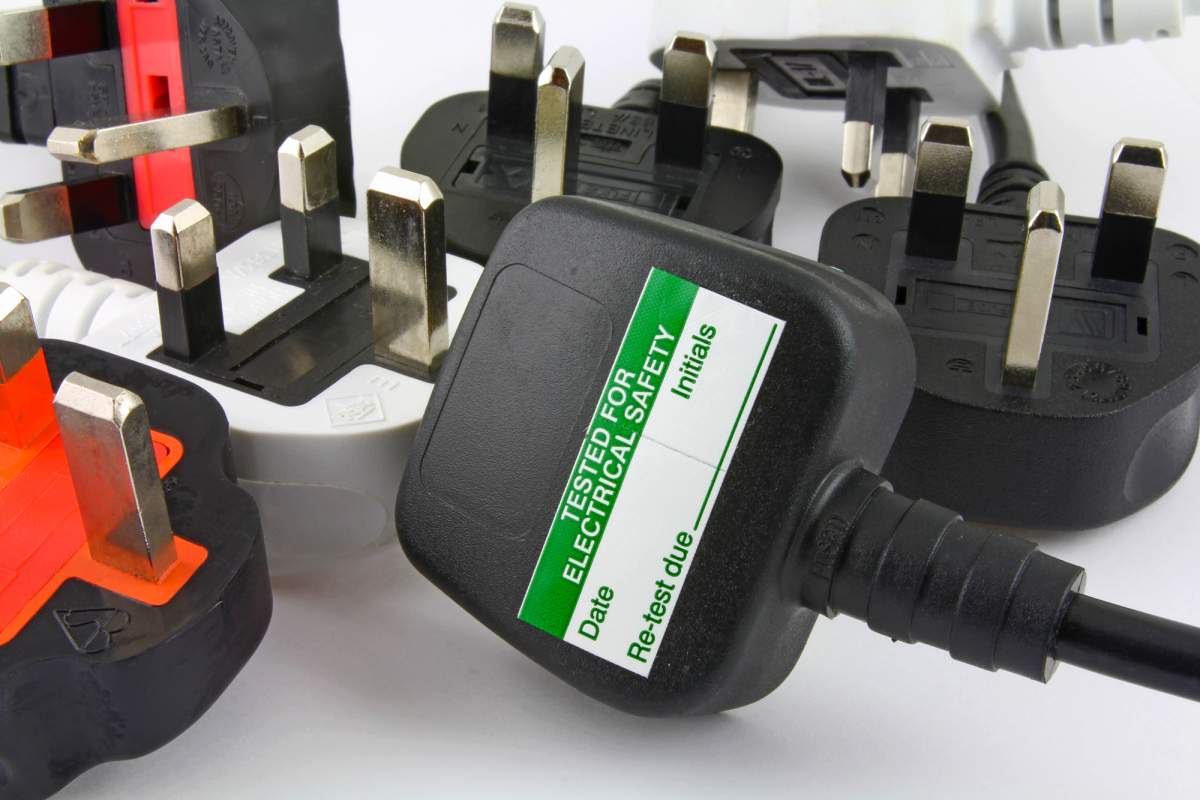
The second part is the electrical testing, carried out with a PAT tester where the appliance needs it. This checks things you can't see by looking, like whether the earth connection is sound and whether the insulation is doing its job. Each item that passes is labelled and logged, so you finish with a clear record of what was tested and when.
"Portable" is a bit of a loose term, by the way, it doesn't just mean things you carry around. It covers more or less anything that plugs into a socket: kettles, computers, extension leads, power tools, fridges, lamps and so on. The fixed wiring in the walls is a separate matter, which we'll come to.
Is PAT testing a legal requirement?
This is where a lot of confusion creeps in, so it's worth being clear. There is no law that specifically names "PAT testing" and orders you to do it. What the law does require is that electrical equipment is kept in a safe condition. Under the Electricity at Work Regulations 1989, employers and the self-employed have a duty to maintain electrical equipment so that it doesn't cause danger, and PAT testing is simply the most recognised, practical way of meeting that duty and being able to prove you've met it.
So the honest position is: PAT testing itself isn't a legal requirement, but keeping your equipment safe is, and PAT testing is how most people show they're doing that. When an insurer or auditor asks for evidence, a set of PAT records is exactly what they're expecting to see.
How often does it need doing?
Here's the myth worth busting: PAT testing does not legally have to be done every single year. That "annual" idea is so widespread that many people assume it's the law, but it isn't. The Health and Safety Executive recommends a risk-based approach instead, meaning how often you test depends on the type of equipment, how heavily it's used and the environment it's in. A computer in a quiet office is low risk and rarely needs testing as often as, say, a power tool on a building site or a kettle in a busy commercial kitchen. Testing everything to the same annual calendar, regardless of risk, is often more than you need.
What it means for businesses
If you're a business, the practical upshot is straightforward: you have a duty to keep the electrical equipment your staff and customers use safe, and PAT testing is the sensible way to stay on top of it and keep the paperwork your insurer and health-and-safety obligations call for. Offices, shops, pubs, cafés, hotels, schools, care homes, warehouses, anywhere with a decent amount of electrical kit, this applies to you. A good tester will work around your opening hours and hand you clear certificates at the end.
What it means for landlords and holiday lets
Landlords have their own version of the same duty: the appliances you supply with a rented property, the cooker, the washing machine, the kettle, need to be safe, and PAT testing is the recognised way to show that.
There's an important Welsh wrinkle here, though, and it's one landlords in Wales often miss. The appliances are one thing; the fixed electrical installation, the wiring, sockets and consumer unit, is another, and in Wales that part is a firm legal requirement. Under the Renting Homes (Wales) Act 2016, rented homes must have the electrical installation inspected and tested at least every five years, with an EICR (Electrical Installation Condition Report) provided to the person renting. That's a separate check, carried out by an electrician, it covers the building's wiring, while PAT testing covers the appliances you put inside it. The two sit alongside each other rather than one replacing the other.
Holiday lets fall under the same appliance-safety duty, and with guests coming and going and equipment getting heavy use, keeping on top of it is just good sense, as well as something booking platforms and insurers increasingly like to see.
The short version
PAT testing is a safety check on your plug-in electrical equipment: a visual inspection, some electrical testing where needed, and a record at the end. It's not a named legal requirement, but keeping your equipment safe is, and PAT testing is the straightforward way to do that and prove it. How often you need it depends on the risk, not a fixed annual rule.
If you'd like to know more about how it works in practice, our PAT testing service page goes into the detail, and if you let property there's a dedicated guide for landlords and holiday lets. Or if you'd just rather talk it through with someone local, feel free to get in touch, we're always happy to help you work out what's right for your premises.
Related PreventaPest service: Find out about PreventaPest portable appliance testing for organisations and landlords.