When an Appliance Fails Its PAT Test: What Happens Next
The engineer hands you a list at the end of the day and there are four items on it. The microwave in the staff room, two extension leads and a floor fan somebody's had since the last office. What now? This is the part of testing that people plan for least and where the real value sits.
What a failure actually means
Not all failures are equal, and lumping them together is how good equipment gets binned and dangerous equipment gets kept.
Some failures are trivial and fixable on the spot: a wrong fuse, a loose cord grip, a damaged plug. A competent person can often correct a suitable plug, fuse or cord-grip fault and then inspect and retest the item before it returns to use. Some are visual and structural: a cracked casing, a lead worn through at the flex point, scorching. Those are usually repair or replace decisions. And some are electrical, such as an unacceptable insulation-resistance or earth-continuity result. These require investigation because the cause may be inside the appliance, its detachable lead, a connection or the test setup. Those are the ones that matter most, because the appliance looks perfectly fine and isn't.
The one mistake that turns testing into a liability
Leaving a failed item plugged in.
Before the test, an unsafe appliance was an unknown risk. After the test, it's a documented one, sitting in your records with a date against it. If it causes an injury or a fire afterwards, the paperwork that was meant to protect you now describes exactly what you knew and when. The HSE's guidance is built around maintaining equipment so that danger is prevented, and a fault you've recorded and ignored is the opposite of that.
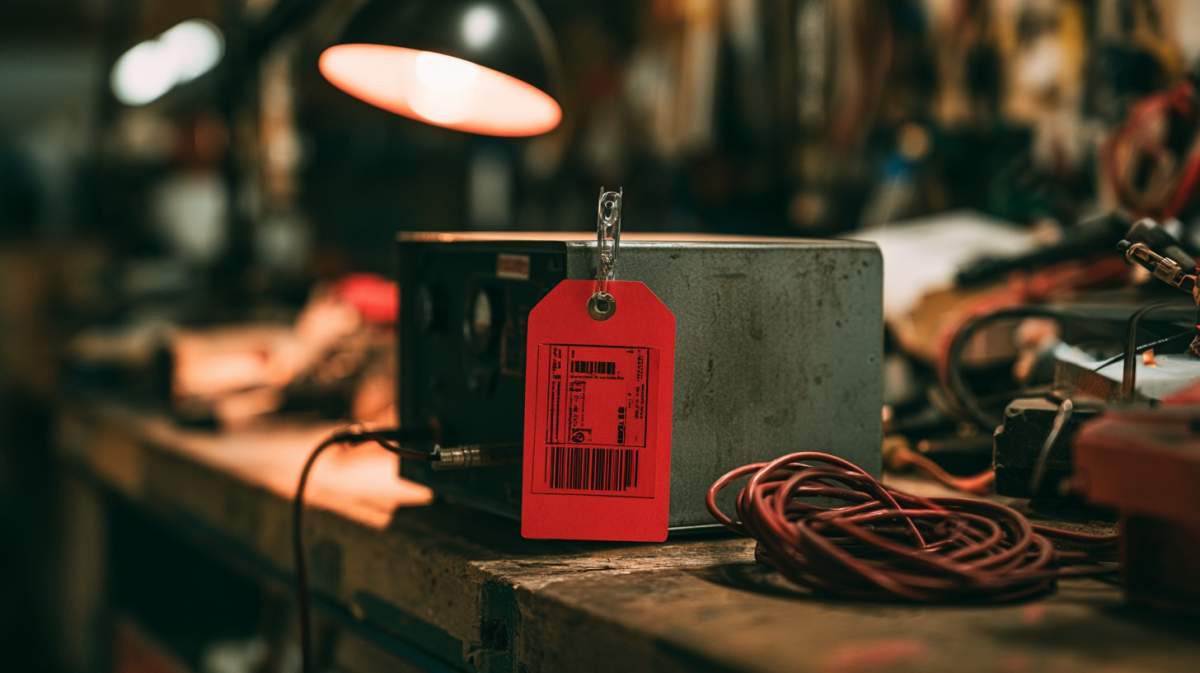
So the rule is simple: a failed item comes out of service the same day. Unplug it, label it, and physically move it if you can, because "don't use the fan in the corner" is an instruction that survives about a week in a busy workplace.
Repair, replace or retire
Our default is to fix the small things while we're there. Fuses and plug tops are minor repairs, they're cheap, and it's better for you than a line on an invoice. Ask any provider whether that's included, because it varies and it's a real difference in cost.
Beyond that it's a judgement. A cheap appliance with an internal fault is almost always cheaper to replace than to have repaired properly. Something substantial and worth keeping goes to a competent repairer and gets retested afterwards. And there's a category nobody likes discussing: the item nobody actually needs, which has been quietly failing for years and can simply go. Every office has two or three.
Closing the loop
Whatever you decide, record it. Your register should show the failure and what happened next: repaired and passed, replaced, or removed from service on this date. That closed loop is the difference between a testing programme and a testing event. It's also the thing that makes next year's visit shorter, because the equipment that shouldn't be there has gone.
More on how we run visits and handle failures is on our PAT testing page.
Get in touch
Want minor repairs included and a register you can actually use? Get in touch and we'll quote the whole job.