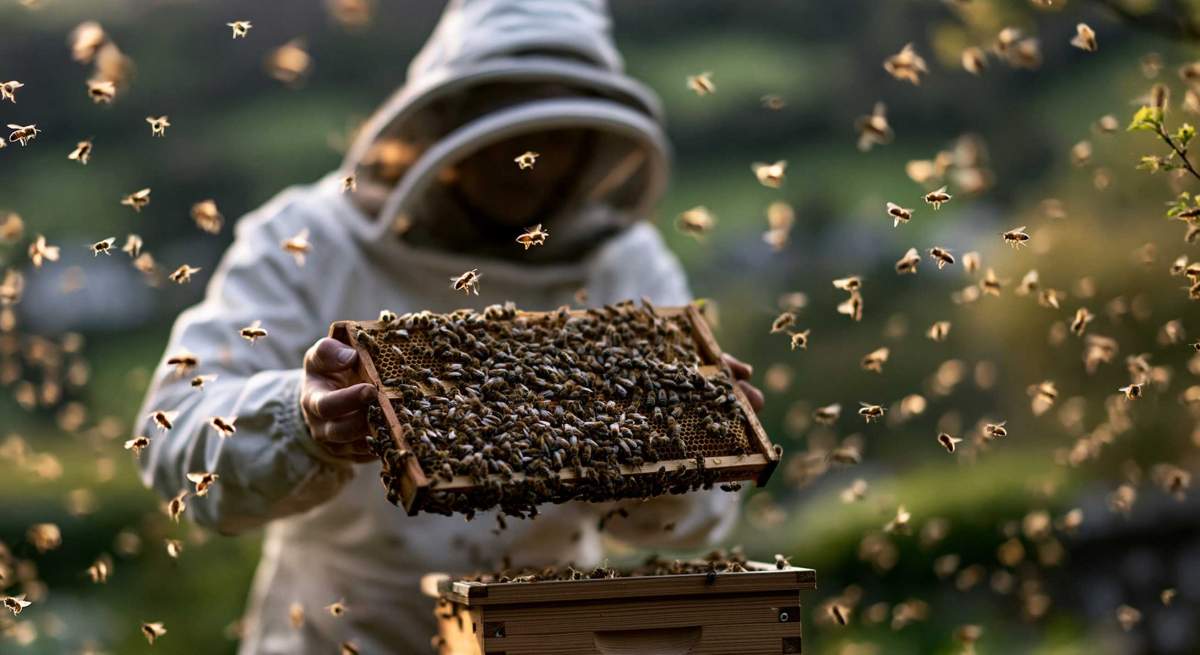
Are Bees Protected in the UK? The Honest Answer and Why We Relocate Them Anyway
Ask around and most people will tell you, with some confidence, that it's illegal to kill bees in the UK, that they're a protected species and touching a nest could land you in court. It's one of the most widely believed "facts" in pest control, and we understand why: it feels like it should be true. But it isn't, and we'd rather give you the honest answer than a comfortable one. Here's what the law actually says, and why, despite that, we relocate honeybees rather than destroy them wherever we possibly can.
What the law actually says
The straightforward truth, from the government's own National Bee Unit: neither honey bees nor any native bee species are protected under UK law. There's no statute that makes it an offence to remove or destroy a bee colony, and anyone telling you otherwise is repeating a myth.
But the same official source is quick to add the context that matters: many bee species are in serious decline, some have already vanished from the UK altogether, and bees remain vital pollinators of crops and wild plants alike. In other words, the law is silent, but the stakes are real. "Legal" and "right" are not the same thing here, and that gap is exactly where a pest control company shows you what it's made of.
Where the industry stands
The British Pest Control Association's advice to the public is that although bees can legally be treated, every other avenue should be explored before eradication is even considered , and professional pest controllers shouldn't apply bee treatments unless there's a serious threat to human life. That's the standard we hold ourselves to. Bees aren't pests in any meaningful sense: they don't damage property, they're not aggressive when left alone, and the garden is better for having them. Our position has always been simple, relocation over destruction, wherever it's possible.
First, work out which bee you've got
What the right response looks like depends entirely on which bee you're dealing with, and this is where most worried callers just need a minute of identification. The British Beekeepers Association notes there are around 250 bee species in the UK, and only one of them is the honey bee , the rest are bumblebees and a long roster of solitary bees.
A honeybee swarm is the dramatic one: many thousands of bees in a hanging cluster, often the shape of a rugby ball, on a branch, fence post or wall. It looks alarming and is usually nothing of the sort, a swarm is a colony in transit, it has no nest to defend, and in most cases it moves on by itself within a day or two. Bumblebees are the rounder, furrier ones, nesting in compost heaps, old burrows and under decking; their nests are seasonal, die off naturally, and are best simply left to get on with it. Solitary bees , the ones dotting little holes in lawns and mortar, are harmless and need nothing doing at all. If you're not sure whether you're looking at bees or wasps, it genuinely matters: the papery grey nest with fast traffic in and out is wasps, and a different conversation, see our guide to dealing with a wasp nest.
So what should you do?
If it's a swarm and it's not causing immediate danger, the best first move costs nothing: give it a day to move on, and if it doesn't, or it's somewhere awkward, the BBKA runs a network of volunteer beekeepers who collect honeybee swarms and give them a new home. You can find your nearest swarm collector on their site with a postcode search.
The harder case is an established colony in the fabric of a building, a chimney, a wall cavity, a roof space. That's the situation we're most often called about, and it's where our relocation-first approach earns its keep: wherever access allows, the aim is to get the colony out alive and off to a local beekeeper rather than reach for a treatment. We've covered how that works on our honey bee removal page, and it's all part of the wider pest control service we run across South and West Wales. Treatment is the absolute last resort, reserved for the rare cases where there's a genuine risk to people and no other way, which is precisely where the industry's own guidance draws the line too.
So: no, bees aren't protected in the UK. But around here, they might as well be.
Get in touch
Got bees, or not sure what you've got? Send us a photo if you can and we'll tell you honestly what it is and what, if anything, needs doing.
Related PreventaPest service: If you need help with an active problem, see our professional pest control service.