How to Get Rid of a Wasp Nest (and When to Leave It Well Alone)
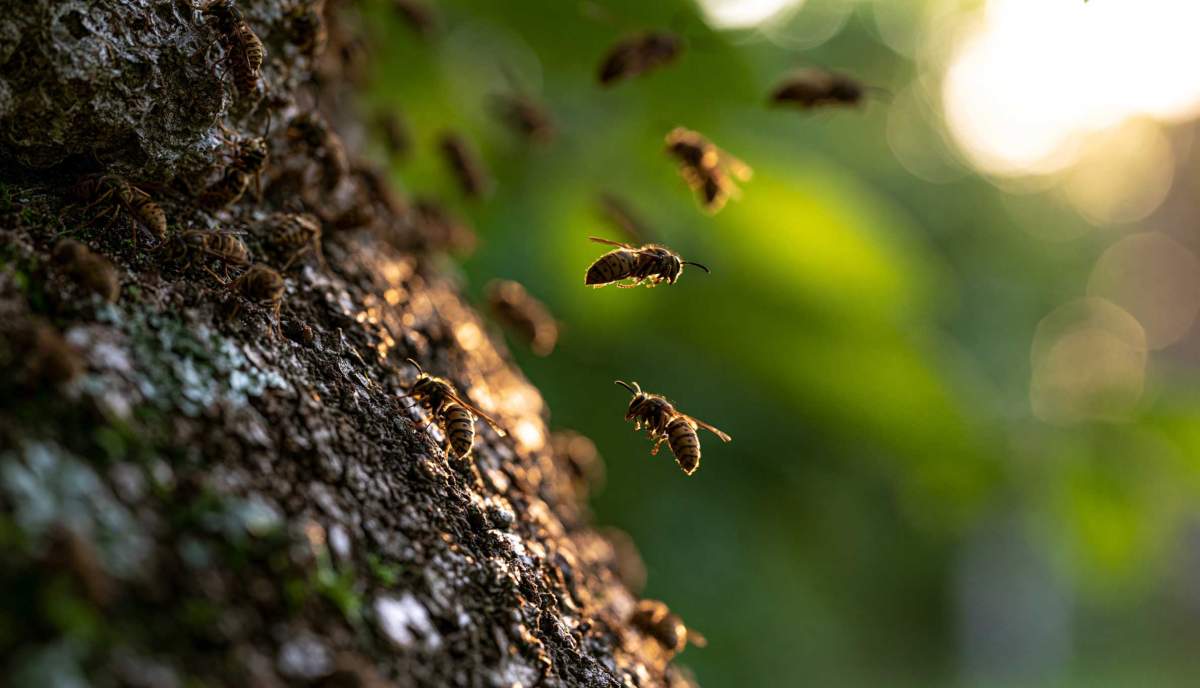
Every July and August, the phone starts ringing with the same story: "There are wasps pouring in and out of a hole under the eaves, and I've just realised there's a nest up there." If that's you right now, you're in good company, this is peak wasp season across South Wales, and it's the busiest few weeks of our year. So here's an honest guide to dealing with a wasp nest: when it genuinely needs treating, why the DIY route goes wrong so often, and what to do instead.
First, know what you're dealing with
A wasp nest isn't a static thing, it's growing all summer. The queen starts building in spring, and at that stage the nest is only about the size of a golf ball. By high summer, with thousands of workers expanding it around the clock, a nest can easily reach the size of a beach ball, and at its peak it can hold around 5,000 wasps, according to the British Pest Control Association. That's worth keeping in mind when you're weighing up whether to have a go at it yourself: the nest you can see is the smaller part of the problem. The thousands of wasps defending it are the bigger part.
Common places we find them: lofts and roof spaces, under eaves and fascias, in wall cavities, garden sheds, compost heaps and holes in the ground. If you can see a steady stream of wasps flying in and out of one particular spot, that's the tell-tale sign.
Make sure they're actually wasps
Before anything else, check you're not looking at bees. It matters, because the right response is completely different. Honeybees swarm and settle in similar spots, chimneys, wall cavities, roof spaces, but a honeybee colony shouldn't be destroyed when it can be relocated to a local beekeeper instead, which is what we always aim to do. If you're seeing rounder, furrier insects, or a large hanging cluster rather than traffic in and out of a papery grey nest, have a read of our honey bee removal page before you do anything. Wasps are slimmer, smoother and brighter yellow-and-black, and their nest, where visible, looks like grey paper, because that's essentially what it is: chewed wood pulp.
Does the nest actually need removing?
Here's something a lot of pest control companies won't tell you: not every wasp nest needs treating. The BPCA's own advice is that a nest well away from buildings, in a rarely used corner of the garden, can often simply be left alone. Wasps do genuine good through the summer, hunting the insects that damage garden plants. And the colony is on a clock regardless: the nest dies off naturally as the cold arrives, and wasps never reuse an old nest the following year.
The calculation changes when the nest is somewhere that puts people in regular contact with it, in the loft, above a doorway, in a wall next to the garden table, anywhere near children playing, or on business premises where staff and customers can't avoid it. In those cases, treating it is the sensible course, and sooner is better than later: the nest only gets bigger and busier as summer goes on, and wasps become noticeably more defensive in late summer.
Why we'd steer you away from DIY
Search "wasp nest removal" and you'll find plenty of videos of people tackling nests with a spray can and a lot of optimism. Here's why we'd genuinely advise against it, and this isn't sales talk, it's the same reason we put on full protective kit for every single wasp job.
Unlike a bee, a wasp doesn't die after stinging, it can and will sting repeatedly. Disturb a nest and the colony defends it together, so what starts as one or two stings can very quickly become dozens. For most people that's extremely painful; for some it's far more serious. Insect stings are among the triggers of anaphylaxis, a life-threatening allergic reaction , and plenty of people don't know they're at risk until it happens. The NHS advice is to call 999 immediately if you suspect it.
Location makes it worse. Nests have a habit of being up ladders, in dark lofts and in awkward corners, exactly where you don't want to be scrambling away from an angry colony. And the two most common DIY mistakes actively backfire: shop-bought sprays rarely reach the heart of a big nest, leaving thousands of survivors on high alert, and blocking the entrance hole doesn't kill the nest at all, it just sends the wasps hunting for another way out, which is often into the house.
What professional treatment looks like
When we treat a wasp nest, it's a quick and unremarkable visit, which is exactly how it should be. A technician in proper protective clothing applies a professional-grade insecticide directly at the nest entrance, the returning workers carry it into the nest, and the colony collapses. You keep well clear, nobody gets stung, and there's no drama. It's all part of our pest control service for homes, farms and businesses across Swansea, Llanelli, Carmarthen and the whole of South and West Wales, and in wasp season we'll get to you fast, because we know you don't want to wait. You'll find more on our wasp control page.
And to keep them from coming back
Once the nest is dealt with, a bit of prevention goes a long way, sealing gaps in fascias and brickwork, keeping bins closed and being careful with sweet food and drink outside. We've covered all of that properly in our guide to keeping wasps out of your garden, including why they take such an interest in your patio in the first place.
Frequently Asked Questions
Not for safety reasons, once the colony is dead the nest is just empty paper, and wasps never reuse an old nest, so it poses no risk left where it is. In an awkward spot like a wall cavity it can simply stay put; somewhere visible, it can be taken down once all activity has stopped.
Not to the nest itself, an old nest is never reoccupied. But new queens emerge each spring looking for nesting sites, and a sheltered spot that suited one colony can suit another. Sealing gaps in fascias and brickwork over winter is the best prevention, our guide to keeping wasps out of your garden covers the details.
Both are common and both are treatable, wasps often nest in air bricks, cavity walls and old burrows in lawns and banks. The key thing is not to block the entrance hole before treatment, as that drives the colony to find another way out, sometimes into the house. Tell us where the activity is and we'll take it from there.
It depends on where the nest is and how accessible it is, so we'd rather give you a straight price for your actual job than a vague "from" figure that changes on the day. Get in touch with a photo or a description of where the activity is, and we'll quote you before anything's booked.
Get in touch
Found a nest at home or at work? Don't chance it with a spray can, get in touch and we'll deal with it safely and quickly.
Related PreventaPest service: If you need help with an active problem, see our professional pest control service.