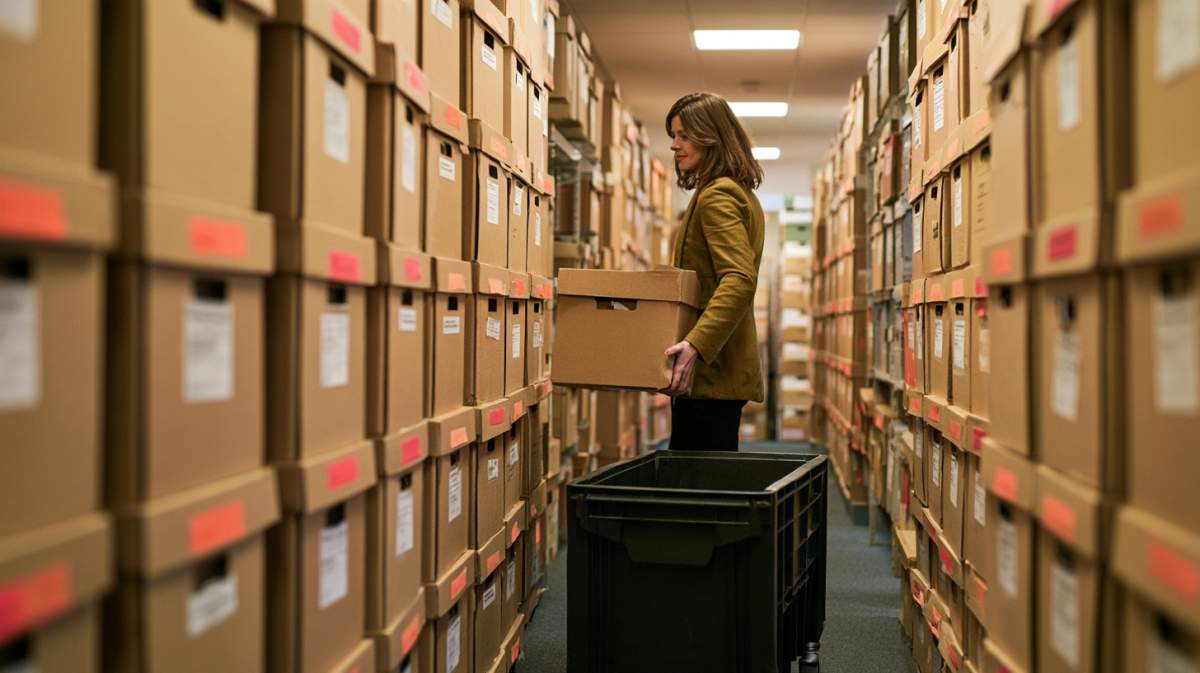
An Office Archive Clear-Out: Planning Secure Collection Before Christmas
The archive room is full, a new delivery needs the space, and somebody suggests clearing the oldest boxes before Christmas. The date on a carton is a useful clue. It is not permission to destroy everything inside.
Plan the clearance as a controlled handover. Decide what can go, keep the decision visible and arrange collection around the building's access and closure dates.
Make an inventory before moving boxes
Start with the location, a reference and a broad description of each group of records. You need enough detail to send the decision to the right person without creating unnecessary copies of personal information.
Separate mixed or unidentified boxes for review. Do not treat “miscellaneous” as a destruction category.
Ask each team to identify records still used for current work, disputes, audits or another continuing purpose. If a hold applies, keep it visible in the clearance list.
Put approval in the right hands
Use your organisation's retention schedule and authorised decision-maker. Different records may have different requirements, even when they share a shelf.
Our guide to how long businesses should keep records explains the broader retention question. This clearance should apply those decisions, rather than invent a new rule because space is running out.
Record approval at a practical level: the reference, what is authorised, who approved it and when. If approval is incomplete, keep that material out of the collection.
Keep Hard Drives and Other Media Separate
If the archive also contains redundant hard drives, tapes or CDs and DVDs, list them separately from the paper files. Check whether their contents are still needed and obtain the appropriate destruction approval before releasing them. Do not assume that an electronic copy is safe to discard simply because the paper original is being cleared.
PreventaTheft provides secure data destruction for hard drives and other media as well as confidential paper shredding. Confirm the media types, quantities and documentation needed when requesting the collection, and keep the items secure until handover.
Estimate the collection properly
Tell the provider about approximate volume, container types, stairs, lifts, parking and the route out of the building. Check whether the collection requires approved bags or other preparation.
Do not promise a collection date to your team before it has been confirmed. December access can be affected by leave, opening hours and building restrictions.
Avoid moving approved waste into an insecure corridor to make the archive look finished. It remains confidential material while it waits.
Control the collection-day handover
Give one person the final list and responsibility for releasing the correct material. Keep retained boxes visibly separate so a helpful colleague does not add them to the load.
Check the agreed paperwork and collection references. After destruction, retain suitable evidence with the approval record. That makes it possible to explain the decision later without keeping another copy of everything destroyed.
Our confidential waste destruction service can be discussed around a one-off archive collection or ongoing needs.
After collection, mark the approved groups as completed and note any boxes withheld. That prevents somebody booking the same clearance again or assuming an unresolved retention decision was settled by the contractor.
Frequently Asked Questions
Do not use one age rule for every category. Check the applicable requirements, continuing purposes and any restrictions before authorising destruction.
Only if keeping a digital copy serves a purpose and the process meets the relevant requirements. Scanning unwanted records can simply move the storage problem.
Get the archive clearance organised
Contact PreventaTheft with your location, approximate volume and preferred timing. We can discuss collection arrangements while you complete the retention decisions internally.