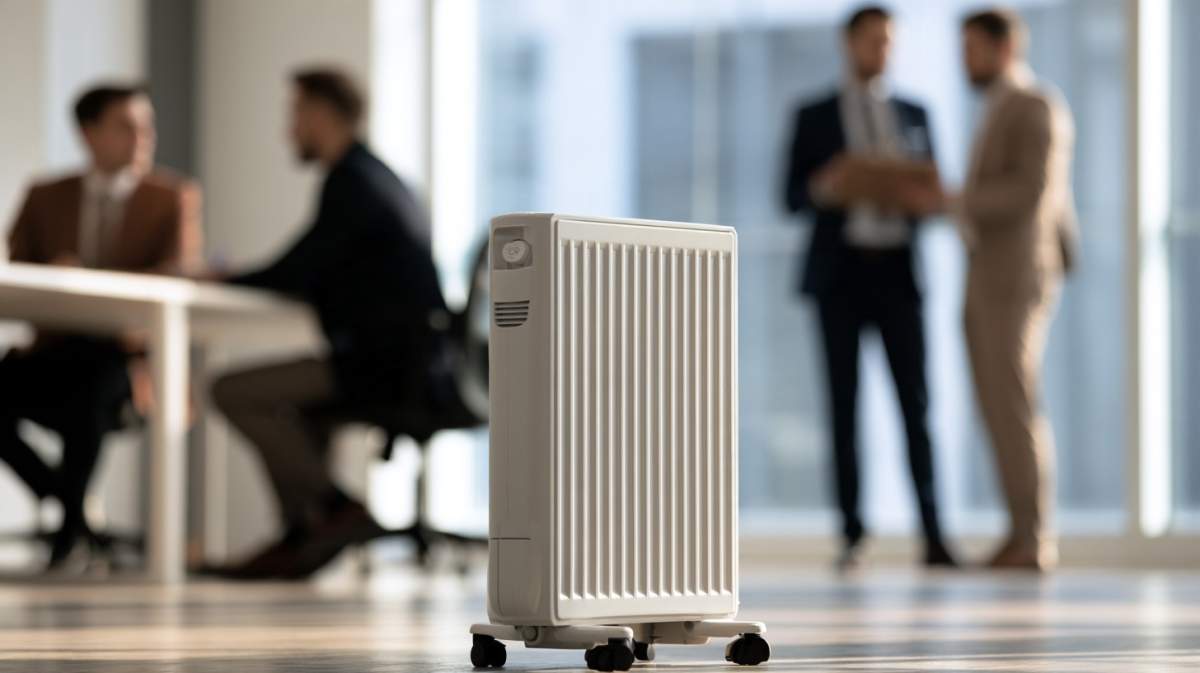
Can Staff Bring Their Own Heaters to Work? A Practical Safety Policy
Somebody is cold, a heater arrives from home, and by lunchtime it is running under a desk. The manager may not find out until another member of staff asks for one too.
You can set a policy controlling personal heaters at work. Make it practical: explain how staff report a cold working area, who can approve equipment and what must happen before it is connected.
Start with why the heater appeared
Ask whether there is a heating fault, a draught or a workstation in an unsuitable place. A personal heater may be somebody's answer to a problem the business needs to address.
HSE's workplace-temperature guidance describes measures employers can consider when people are too cold. Your policy should give staff a route to that discussion, rather than simply removing the heater and leaving the problem.
Temporary heating also needs to fit your fire-risk arrangements, building conditions and any landlord or insurer requirements.
Make approval happen before use
State who can authorise personal equipment and how it will be assessed. Ask for the manufacturer's information and a clear description of where it will be used.
HSE's portable-equipment guidance specifically discusses controlling employee-brought equipment and considering permitted items in the maintenance plan. A personal purchase receipt does not answer the workplace suitability question.
Do not promise that every proposed heater can be made acceptable by a PAT test. Inspection and testing are only part of the decision.
Decide the location and connection
Check the instructions and proposed surroundings. Consider combustible materials, occupied routes, stability and whether a lead could be trapped or damaged.
Have the supply and loading arrangement reviewed by an appropriate competent person where needed. Staff should not solve a lack of suitable connections by adding adaptors under the desk.
Our existing heater safety article covers equipment checks. This policy adds the responsibility and permission arrangements around them.
Write down who does what
Use the following points as a starting checklist for your own policy:
- Staff report cold conditions to the named manager before bringing in equipment.
- A heater remains unplugged until its use and location have been approved.
- The approval records the item, location, responsible person and any restrictions.
- Moving or replacing it requires the arrangement to be reviewed.
- Damage is reported immediately and the heater is taken out of use.
- The closing team knows who switches it off and checks the area.
Adapt this to your building and fire-risk arrangements; a checklist does not replace the assessment.
Decide who checks rooms at the end of the day and how approved equipment will be identified. Make the arrangement work for part-time staff and cleaners who may be last to leave.
If you prohibit personal heaters, explain the alternative process for dealing with cold conditions. A policy nobody can follow tends to turn into hidden equipment.
Include temporary workers and visitors in the communication. A clear rule loses its value if only permanent staff have seen it, or if approval depends on finding one manager who is away.
Frequently Asked Questions
No. Permission, suitability and the building's safety arrangements still apply.
Only within the agreed arrangements. Review maintenance, location and responsibility rather than letting temporary approval drift indefinitely.
Include approved equipment in your plan
PreventaShock provides commercial PAT testing across South Wales. Tell us about employee-owned equipment that has been approved for use so it can be considered alongside your business equipment.