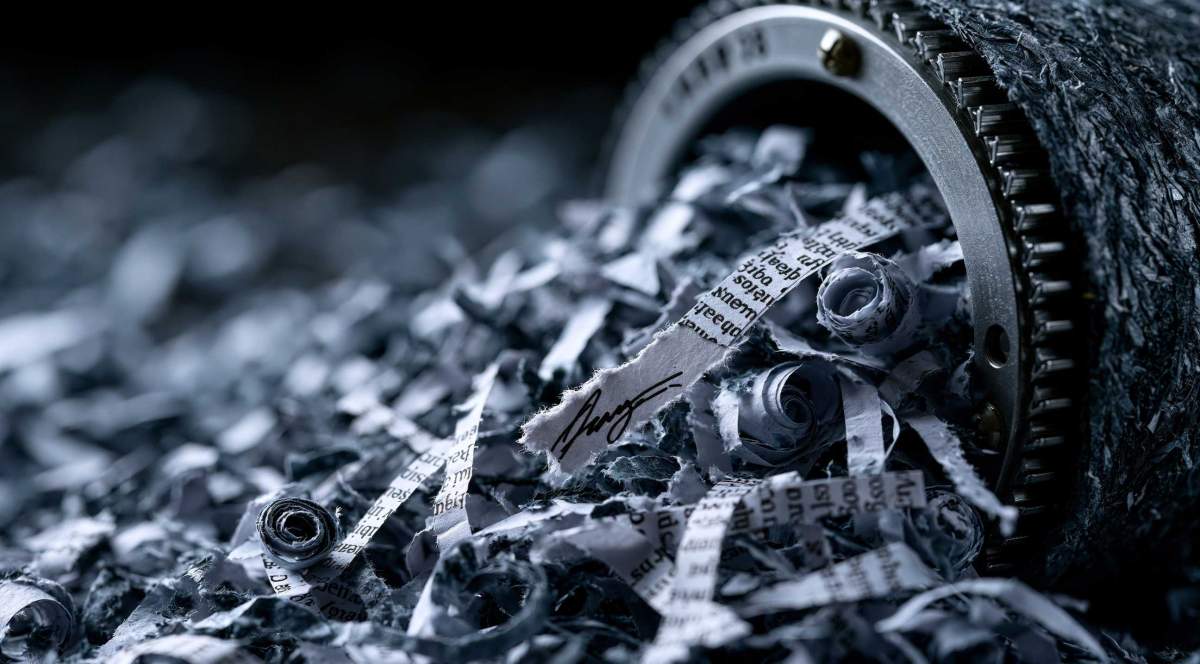
What Actually Happens If You Put Confidential Paper in the Bin?
Friday afternoon, end of the month, and someone's finally clearing the shelf above the printer. Old invoices, a staff rota, a handful of customer letters, all swept into a black bag and out to the wheelie bin with the coffee grounds. It feels like tidying up. Legally, you may have just published it.
The bin is not the end of the story
The moment that bag leaves your building, you've lost control of it, and the law doesn't stop caring just because you've stopped looking. A kerbside bin isn't secure: bags split, collections get windy, and people who make a living from identity fraud know exactly which bins behind which premises are worth a look. A single invoice carries a name, an address and a working relationship, which is most of what someone needs to start impersonating your customer or your business.
What the law actually expects
Under the UK GDPR and the Data Protection Act 2018, personal data has to be disposed of securely, and the regulator is specific about what that means in practice. The ICO's own guidance for organisations describes locked bins for paper awaiting destruction, shredding or incineration, and destruction certificates from any third party you use. Ordinary waste and ordinary recycling meet none of that. It's worth knowing that the first fine the ICO ever issued under the GDPR involved exactly this failure: a pharmacy storing patient paperwork in unlocked containers in a rear courtyard. Not hacked, not stolen. Just left where it shouldn't have been.
To be fair: not everything needs shredding
We shred paper for a living, so believe us when we say the opposite too: most of your waste paper is fine in the recycling. Trade magazines, printed marketing, packaging, blank forms, anything with no personal or commercially sensitive information on it can go in the ordinary bin with a clear conscience. The habit that works is the simplest one: if it has a name on it, it goes in the secure pile. A clear-desk, shred-it-if-in-doubt policy costs nothing and takes the decision away from whoever happens to be tidying up on a Friday.
What doing it properly looks like
Secure disposal isn't complicated, it's just deliberate. Your confidential paper waits in a locked cabinet or a sealed bag rather than an open bin. When it's collected, you get a Duty of Care Waste Transfer Note recording the handover, and once it's destroyed, a Certificate of Destruction for your records. That certificate is the difference between "we threw it away" and "we can prove it was destroyed", and if the ICO or an auditor ever asks, only one of those answers helps you. If you're not sure what's due for destruction in the first place, our guide to how long to keep business records is the place to start.
Get in touch
Got paperwork that shouldn't go in the bin? We'll supply the bags, collect on a schedule or as a one-off, and send the certificate when it's done. There's more on our confidential waste destruction page.